Price lists
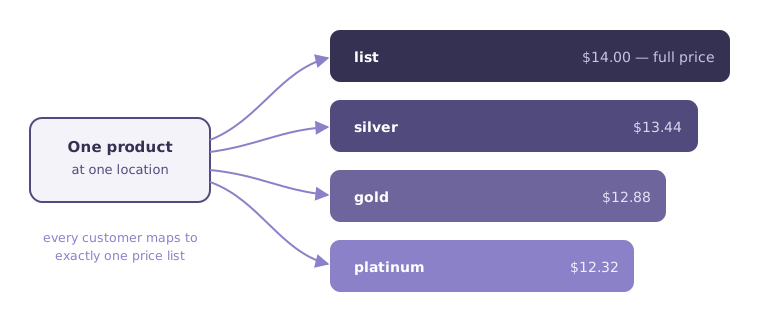
A price list is a customer tier: a named set of prices for the same products. Every customer maps to exactly one price list, and every pricing rule targets one — so price lists are how one catalogue serves wholesale customers, loyalty tiers, or contract customers at different price levels.
The default list
Every Resolve environment has a protected default list that serves any customer not mapped to a specific tier. It behaves like any other price list — rules target it the same way — but it cannot be deleted, so there is always a price to fall back to.
Tiers in practice
The demonstration dataset uses four lists — list, silver, gold, and platinum — each tier priced a little keener than the one before. A typical pattern:
| Price list | Who | Typical position |
|---|---|---|
| list | Unmapped / walk-in customers | Full price |
| silver | Registered trade customers | A few percent below list |
| gold | High-volume customers | Better again |
| platinum | Strategic accounts | Best pricing |
Because each price list carries its own rules, tiers don't have to be a flat discount off list — you can shape each tier's margin by category, and a workflow can maintain the laddering automatically.
Where price lists appear
- Set prices — the pricing matrix shows one column group per price list per location; you choose which lists are visible with Select Price Lists, and can create a new list right from the grid.
- Review prices — filter the Review grid to any price list to audit a tier end to end.
- Workflows — automation writes prices per price list, so one workflow can maintain every tier in a single run.
Next: where changes live before they go live — Scenarios & Live.