Managing data
The Data Management pages maintain the commercial data that pricing depends on: products, their attributes, the hierarchy, locations, and global settings.
Global data — changes take effect immediately
Unlike pricing changes, master data is not drafted in scenarios. Everything on these pages is global: an edit affects Live and every open scenario for every user, immediately. The toolbar shows a warning banner on these pages as a reminder.
Products
Products lists the catalogue: business IDs, names, and family membership. The Pricing Attributes tab shows attribute values per product — unit cost, competitor price, MSRP, pack size, or anything else you've defined — and Attribute fields is where those fields themselves are created and managed.
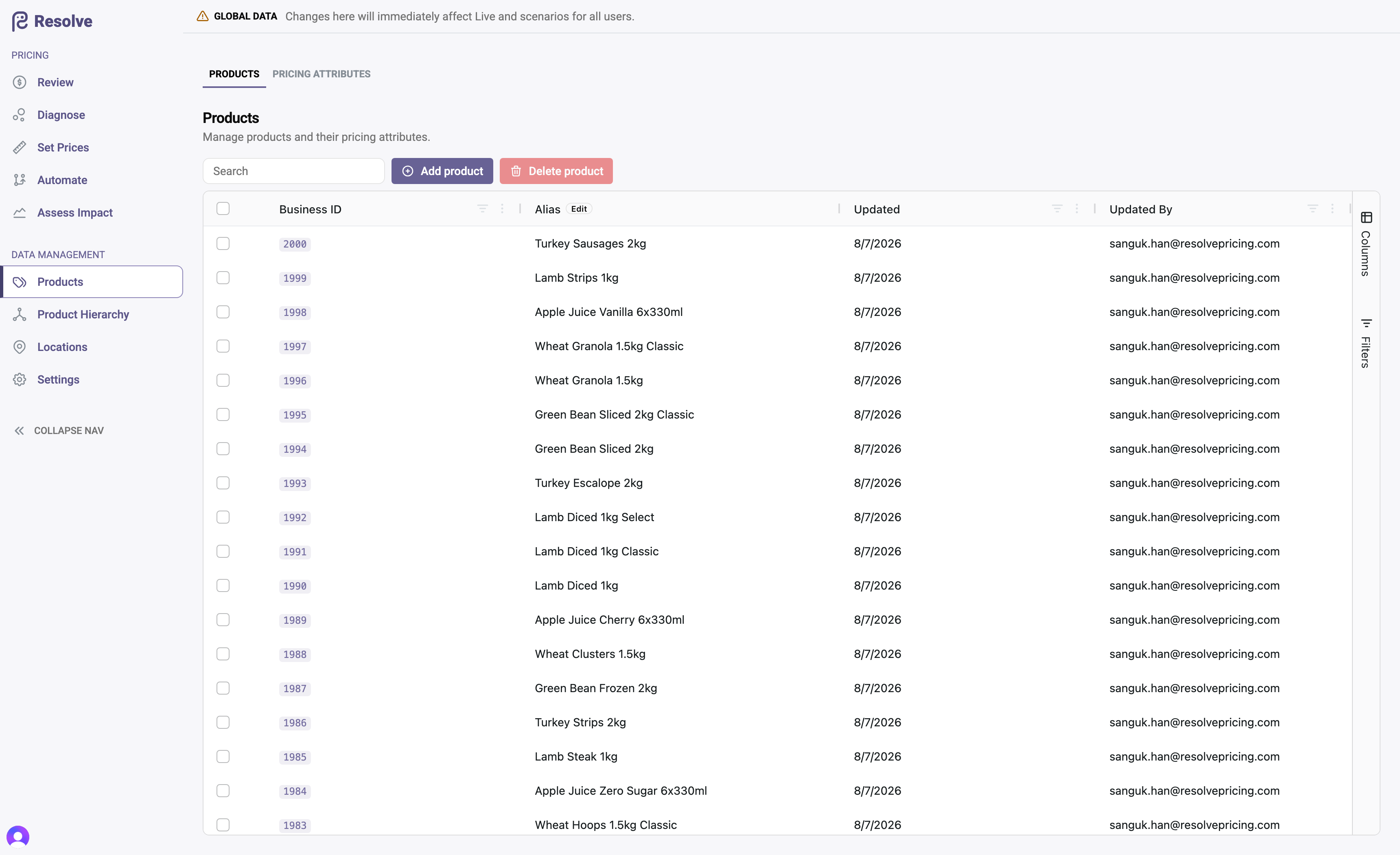
Attributes are the raw material of pricing: cost-pegged rules read the unit cost, workflow triggers and decisions can reference any attribute, and the Review grid can display any of them alongside prices.
Product Hierarchy
The Product Hierarchy page manages the tree that rule inheritance runs through:
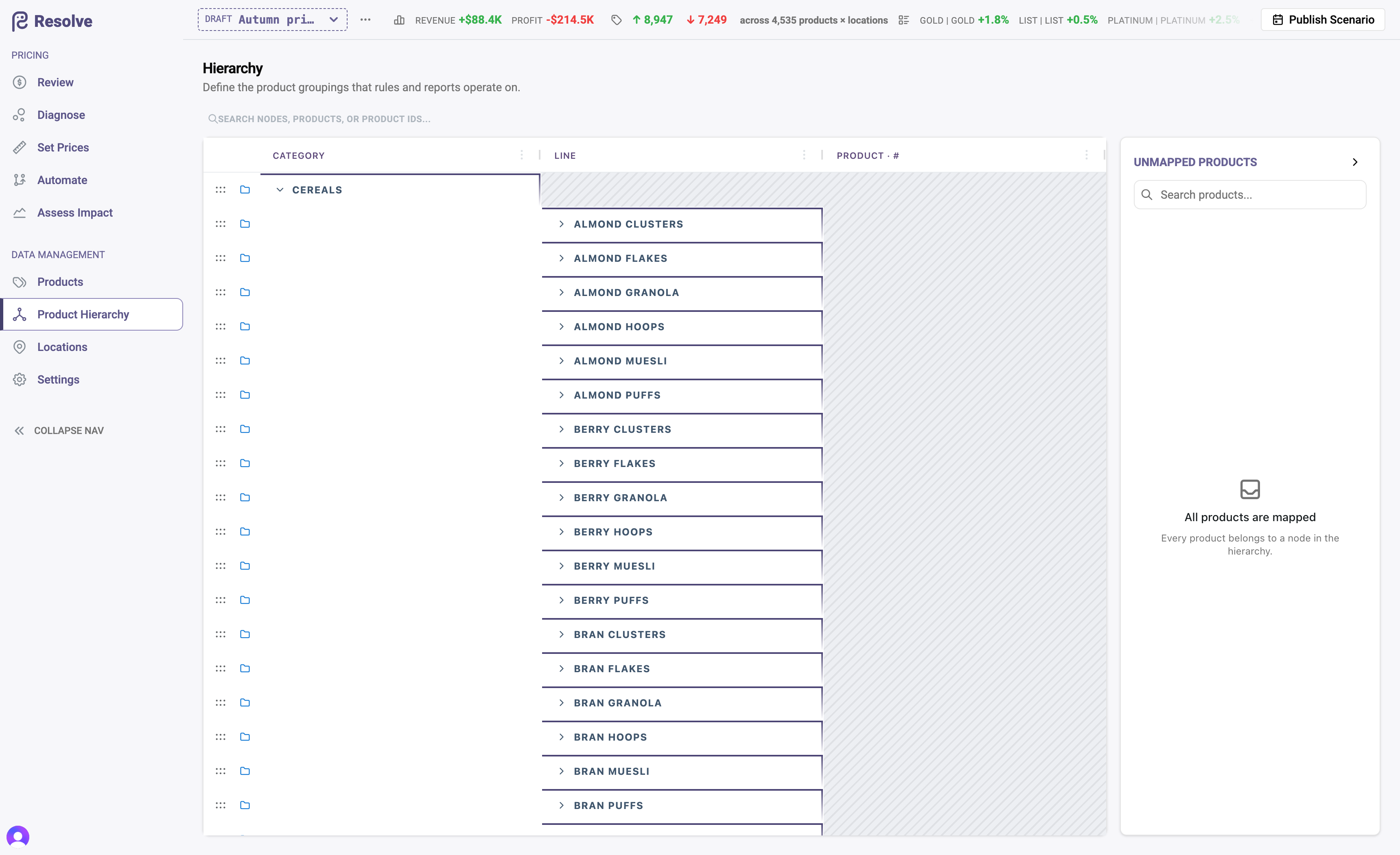
- Levels — rename a level, insert a new one above or below, or delete one; each level header shows how many groups and product mappings it carries.
- Groups — create groups, and move products between them by drag-and-drop (individually or in bulk). Every move can be undone from its confirmation toast.
- Product families — create and restructure families: make a product the head, move members in or out by dragging, or dissolve the family.
Products left unmapped can't inherit prices — the page makes them easy to find and place.
Locations
Locations maintains the stores, branches, or regions you price for, and the groupings used across pricing and analytics.
Settings
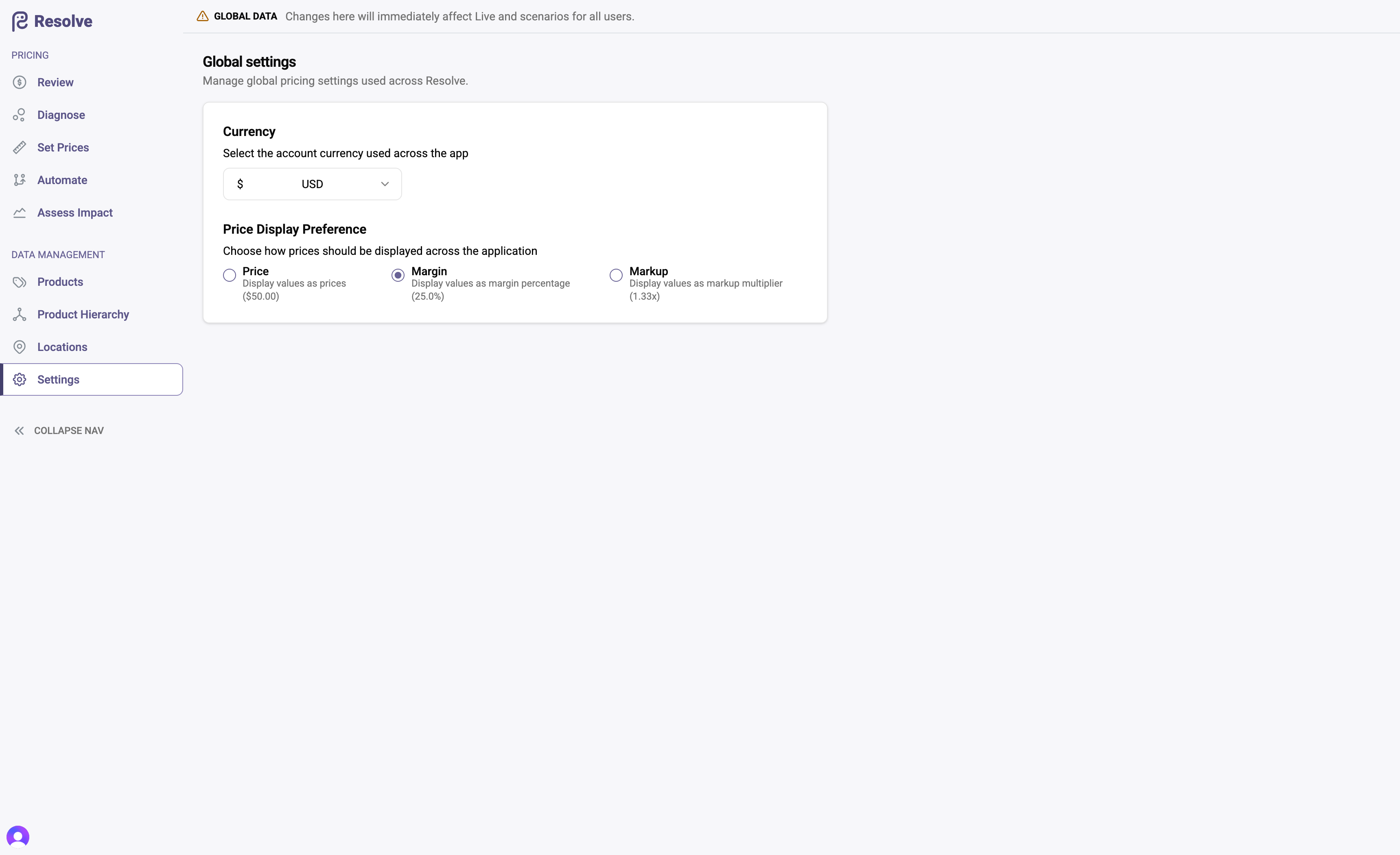
Global settings holds two environment-wide choices:
- Currency — the currency all prices display in.
- Price Display Preference — whether the application presents prices, margins, or markups as the primary lens. This relabels grids, titles, and edit forms everywhere; it changes presentation only, never the underlying rules.
Return to Set prices after the catalogue, hierarchy, locations, and settings are ready.